
Property Investment for Beginners in Malaysia: The Complete 2026 Guide

What if the biggest risk in the 2026 Malaysian real estate market isn't a potential bubble or rising interest rates, but the cost of waiting for a "perfect" moment that never arrives? Understanding property investment for beginners Malaysia starts with acknowledging these fears, especially with the 8% stamp duty for foreign buyers and the legal fees regulated by the Solicitors' Remuneration Order 2023. It's natural to feel cautious when your savings are at stake. We understand that the transition from saver to investor can feel like a steep climb through a fog of hidden costs and complex regulations.
This comprehensive guide replaces that uncertainty with a stable, data-driven strategy. We promise to help you master the fundamentals of the local market, from identifying high-potential new launches to building a secure portfolio with professional guidance. You'll gain the confidence to select properties with high capital appreciation while avoiding common pitfalls. We'll walk you through a clear roadmap that covers everything from initial savings to your first rental income, ensuring you feel informed and in control at every step of your investment journey.
Key Takeaways
Evaluate your financial readiness using the 30% rule and Debt Service Ratio (DSR) to ensure a manageable and secure investment journey.
Identify your primary objective by comparing rental yield targets of 4-6% against the long-term potential of capital appreciation.
Develop a clear understanding of property investment for beginners Malaysia to capitalize on the market's resilience and growth opportunities in 2026.
Navigate the structured buying process with confidence, moving methodically from the initial Letter of Offer to final loan approval.
Leverage professional advisory services to transform complex market data into a personalized, low-risk roadmap for your property portfolio.
Table of Contents
What is Property Investment and Why Start in Malaysia?
Starting your journey into real estate requires a shift in perspective. You aren't just buying a building; you're acquiring a vehicle for wealth. At its simplest level, What is Property Investment? It involves purchasing real estate to generate a consistent income stream or benefit from an increase in value over time. For those exploring property investment for beginners Malaysia, the local market offers a unique combination of stability and accessibility that is hard to find in more volatile asset classes like cryptocurrency. You can't touch a digital coin, but you can walk through the front door of a condominium.
You can physically inspect a property. You can renovate it to add value or change the management strategy to increase returns. This tangibility provides a sense of security that digital assets lack. In early 2025, the Malaysian House Price Index averaged RM 486,070, reflecting a steady 0.9% annual growth. This controlled trajectory makes Malaysia an ideal environment for those who prioritize long-term confidence over high-risk speculation. It's a market built on physical foundations and clear legal frameworks, providing a steady hand for your first steps into land ownership.
The Core Benefits of Real Estate in 2026
Investors choose property because it serves multiple financial purposes simultaneously. First, it generates passive income. By securing a reliable tenant, you create a monthly cash flow that can cover your mortgage installments or supplement your lifestyle. Second, you benefit from capital appreciation. As national infrastructure projects like the Johor Bahru-Singapore Rapid Transit System (RTS) Link approach completion in late 2026, surrounding property values often see upward movement. Finally, real estate acts as a sophisticated hedge. When the cost of living rises, property prices and rental rates typically follow suit, protecting your purchasing power over the decades.
Common Property Types for Malaysian Beginners
Choosing the right asset class is the next logical step in your journey. Most beginners start with residential properties. Condominiums and terrace houses are popular choices, particularly within the "New Launch" segment where entry costs might be lower due to developer incentives. If you have higher capital, you might consider commercial units like shop lots or offices, though these require a deeper understanding of business cycles. For those with limited initial funds, Real Estate Investment Trusts (REITs) offer a way to invest in large-scale properties through the stock market. Exploring property investment for beginners Malaysia through these varied lenses helps you align your portfolio with your specific financial goals and risk tolerance.
Evaluating Your Financial Readiness: The Beginner Checklist
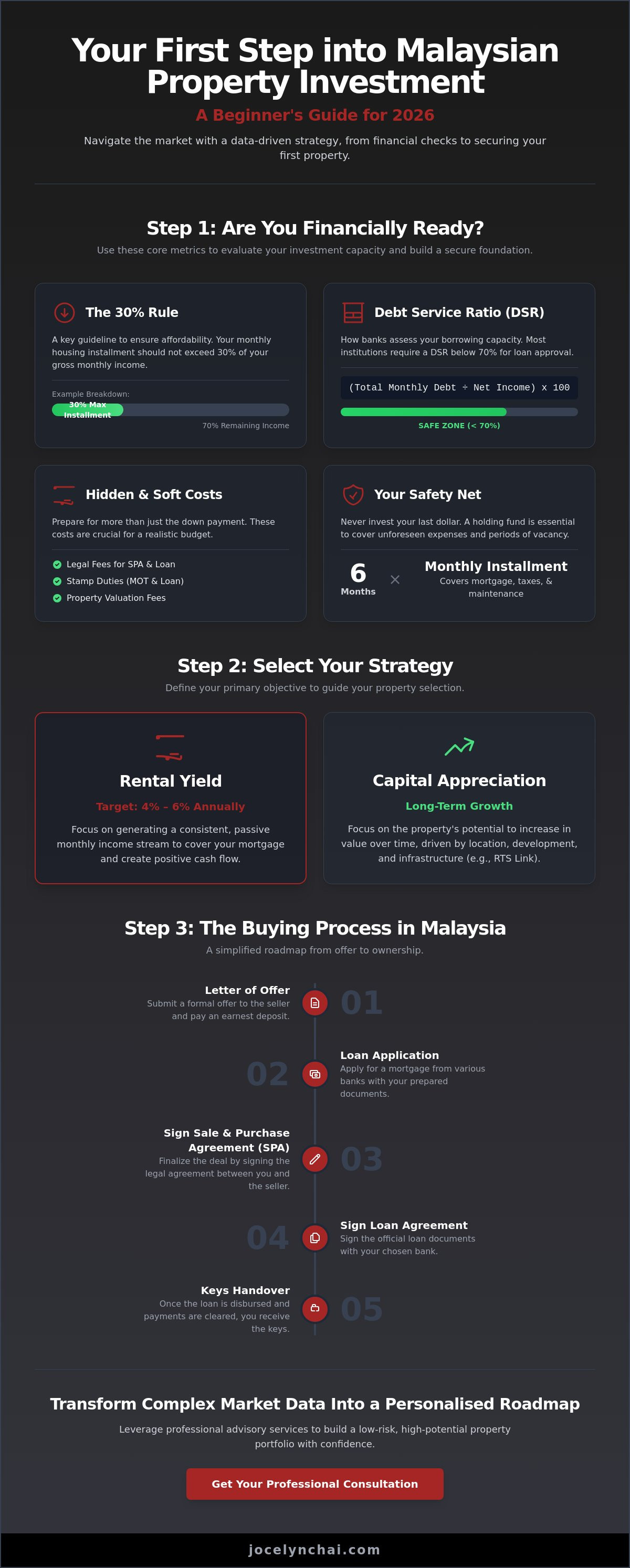
Financial peace of mind begins with a realistic budget. When exploring property investment for beginners Malaysia, apply the 30% rule. This guideline suggests your monthly housing installment shouldn't exceed 30% of your gross monthly income. Malaysian banks evaluate your borrowing power using the Debt Service Ratio (DSR). They calculate this by dividing your total monthly debt, including car loans and credit cards, by your net income. Most banks look for a DSR below 70%, though this varies by institution. Knowing your DSR before you start browsing prevents the disappointment of a rejected loan application later.
Preparation requires more than just a down payment. You need a clear view of the soft costs that often surprise first-time buyers. These include legal fees, valuation fees, and stamp duties. The 2026 landscape includes specific government initiatives for homebuyers, such as the extension of stamp duty exemptions for Malaysian citizens buying homes up to RM 500,000 until December 31, 2027. If you're a first-time investor, these exemptions can significantly reduce your initial cash outlay.
Never invest your last Ringgit. Establish a holding fund equivalent to at least six months of mortgage installments. This buffer covers maintenance costs, quit rent, assessment tax, and potential vacancy periods between tenants. A solid financial cushion transforms a potentially stressful investment into a manageable journey. If you feel overwhelmed by these calculations, a property investment consultation can help clarify your specific numbers and risk profile.
Understanding the Total Cost of Acquisition
Don't let zero-down payment marketing cloud your judgment. While some new launches offer rebates that cover the initial 10% down payment, you still need cash for legal fees and the Memorandum of Transfer (MOT). Based on the Solicitors' Remuneration Order 2023, legal fees for the Sale and Purchase Agreement (SPA) are 1.25% for the first RM 500,000. Additionally, the stamp duty on loan agreements is 0.5% of the total loan amount. These costs are mandatory and usually require upfront payment during the signing process.
Improving Your Credit Score for Better Rates
Your financial health is visible through CCRIS and CTOS reports. Banks scrutinize these records to determine your interest rates and loan-to-value ratio. Six months before applying for a loan, ensure all credit card and utility payments are on time. Avoid taking on new debt like personal loans or hire purchase agreements. This discipline demonstrates reliability and helps you secure the most competitive rates available in the 2026 market. A higher credit score doesn't just get you a loan; it gets you a better deal, which is a core pillar of property investment for beginners Malaysia.
Selecting Your Strategy: Rental Yield vs. Capital Appreciation
Successful property investment for beginners Malaysia requires a clear choice between two primary financial objectives: immediate cash flow or long-term value growth. Rental yield represents the annual rent you receive divided by the total property price. In the current market, targeting a gross yield of 4% to 6% is a realistic benchmark for residential units in urban centers. Capital appreciation is the increase in the market value of your asset over time. According to recent Malaysian property market analysis, while annual growth rates can be modest, the cumulative effect over a decade provides a significant wealth-building opportunity.
Investors must also decide on their preferred management style. Short-term rentals through platforms like Airbnb often promise higher yields, sometimes reaching 8% or more in tourist hubs. However, they demand more active management and face stricter building regulations in many Malaysian states. Long-term tenancies offer a more predictable, low-pressure experience. This often suits those just starting their journey and looking for stability. New launch properties frequently serve as a balanced entry point. They allow you to secure a modern asset with the latest amenities that appeal to both short-term travelers and long-term professionals.
The "Buy and Hold" Strategy for Long-Term Wealth
Patience is your strongest asset in real estate. A buy and hold strategy focuses on identifying growth corridors, which are areas where future infrastructure like new highways or rail links will drive demand. To calculate your realistic net rental yield, subtract expenses like maintenance fees, quit rent, and insurance from your gross rent. This honest assessment ensures your investment remains a source of security rather than a financial burden. We focus on helping you identify these corridors early, moving you from speculation to a data-driven plan.
New Launch Advisory: Why Early Entry Matters
Securing a unit during the initial phases of a development often provides "Early Bird" pricing and attractive developer rebates. These incentives can lower your effective purchase price, giving you an immediate equity cushion. A brand-new building also comes with a developer's warranty period, usually 24 months, which protects you from unexpected repair costs. Our New Launch Property Advisory services focus on these specific benefits. We help you select projects with modern facilities that will remain competitive in the 2026 rental market, ensuring your first step into property investment for beginners Malaysia is a confident one.
The Step-by-Step Property Buying Process in Malaysia
Understanding the mechanical steps of acquisition transforms a complex transaction into a manageable series of milestones. For those pursuing property investment for beginners Malaysia, the journey officially begins with a clear, five-phase progression. Moving methodically through these stages ensures you maintain control over your finances and legal protections. This structured flow includes:
Phase 1: Booking and Letter of Offer. You pay a booking fee and sign a Letter of Offer to secure the property price and unit number.
Phase 2: Loan Application. You submit your financial documents to banks to secure a mortgage, navigating the DSR requirements we discussed previously.
Phase 3: Legal Documentation. You sign the Sale and Purchase Agreement (SPA) and the Loan Agreement, officially binding the transaction.
Phase 4: Progress Billing. For new launches, the bank releases funds in stages based on construction milestones; for sub-sale units, this involves full disbursement.
Phase 5: Vacant Possession (VP). You receive the keys to your unit and begin the Defect Liability Period.
Each phase requires attention to detail and a calm, patient approach. Rushing through the legal or financial checks can lead to oversights that impact your long-term returns. By following this roadmap, you replace guesswork with a professional standard of acquisition.
Navigating the Legal Maze (SPA and MOT)
Your Sale and Purchase Agreement is the most critical document in your investment journey. It outlines the developer's obligations, your payment schedule, and the exact specifications of your unit. Before you take possession, ensure the building has received its Certificate of Completion and Compliance (CCC). This certificate, issued by registered professionals, confirms the property is safe and fit for occupation. The Defect Liability Period serves as a 24-month safety net for buyers, requiring the developer to repair any structural or workmanship issues at their own cost. If you're unsure about the legal nuances, our property investment consultation provides the expert oversight you need to sign with confidence.
From Handover to First Tenant
Receiving your keys marks the transition from buyer to landlord. You'll need to decide between offering a bare unit, which has lower upfront costs, or a fully furnished unit that might command a higher rental yield. Effective tenant screening is essential to protect your asset. Many successful investors utilize professional rental agents to handle background checks and contract management. In 2026, integrating digital payment platforms will simplify your monthly collections and provide clear financial records for tax purposes. This final step completes the cycle of property investment for beginners Malaysia, turning a physical asset into a source of consistent passive income.
Why Professional Investment Consultation is Your Best First Move
Enter the Malaysian real estate market with the quiet confidence that comes from expert oversight. While many start their journey by browsing endless online portals, a professional advisor transforms this process from a series of guesses into a data-driven strategy. For those exploring property investment for beginners Malaysia, having a dedicated specialist ensures you aren't just buying a unit; you're acquiring a vetted asset. Jocelyn Chai Properties acts as a steady hand, prioritizing your long-term peace of mind over a quick sale. We provide the market data and historical analysis required to move you from uncertainty to a state of knowing.
Our New Launch Property Advisory services focus on identifying projects that offer genuine value rather than just flashy marketing. We analyze developer track records, construction quality, and localized demand patterns to ensure your first investment stands on a solid foundation. This low-pressure approach allows you to absorb information at your own pace, ensuring every decision aligns with your personal financial goals. By leveraging professional expertise, you replace the stress of the unknown with a structured, manageable roadmap.
Saving Time and Avoiding Costly Mistakes
Filter through the noise of thousands of listings to find the top 1% of opportunities. Most beginners spend months researching without knowing which data points actually matter. A consultant acts as your advocate during negotiations and legal reviews, catching potential issues before they become expensive problems. For example, many investors "buy into the hype" of a new area based solely on a beautiful showroom, only to realize later that the location lacks the infrastructure to support consistent rental demand. Professional advice prevents these common pitfalls by focusing on objective growth indicators rather than developer brochures.
Building a Long-Term Strategic Partnership
Think beyond your initial purchase. Building a secure property portfolio requires a vision that extends to your second and third assets. We focus on establishing a long-term partnership that evolves alongside your financial journey. This relationship grants you access to off-market information and early-stage project launches, giving you a competitive edge in the 2026 market. As you move from a single unit to a diversified portfolio, having a trusted mentor ensures your strategy remains cohesive and low-risk. To begin your journey with a dedicated advocate, schedule a professional property investment consultation today.
Secure Your Financial Future Through Informed Real Estate Decisions
Building a successful property portfolio in 2026 requires more than just capital; it demands a methodical approach to financial readiness and market selection. You've learned how to evaluate your borrowing power using the Debt Service Ratio and why selecting the right strategy between rental yield and capital appreciation is vital for long-term growth. Mastery of property investment for beginners Malaysia is achieved by replacing emotional impulses with data-driven analysis and a clear understanding of the legal buying process. This structured foundation protects your savings while positioning you for sustainable wealth.
You don't have to navigate this complex landscape alone. We provide expert New Launch Property Advisory and supportive, low-pressure guidance to help you identify the most promising opportunities in the current market. By prioritizing your peace of mind, we ensure every step you take is backed by thorough research and professional expertise. Begin your investment journey with a professional consultation and transform your aspirations into a tangible, high-performing asset. Your path to secure wealth starts with a single, well-informed step.
Frequently Asked Questions
Is property investment in Malaysia still profitable for beginners in 2026?
Property investment remains a viable path for wealth building in 2026, especially as national infrastructure projects like the RTS Link approach completion. While rapid price spikes are less common, the market's steady growth provides a stable environment for those starting their journey. Beginners find success by focusing on transit-oriented developments that cater to the evolving needs of urban professionals.
How much minimum salary do I need to start investing in property?
Your required salary depends on the property price and your existing debt obligations. For a property priced at RM 450,000, you'll likely need a gross monthly income of at least RM 6,000 to RM 7,000 to meet bank lending criteria. Maintaining a Debt Service Ratio below 70% is essential to secure approval and ensure your monthly commitments remain manageable.
What is the difference between Freehold and Leasehold for an investor?
Freehold properties grant permanent ownership, while leasehold properties are held for a specific duration, typically 99 years. For an investor, freehold units often enjoy better long-term capital appreciation and easier financing as the lease shortens. Leasehold properties, however, are sometimes priced more attractively and can offer higher rental yields in prime locations.
Should I buy a New Launch or a Subsale property for my first investment?
New launch properties are generally recommended for your first step into property investment for beginners Malaysia. They often include developer rebates that lower your initial cash outlay and come with a 24-month Defect Liability Period. This warranty protects you from repair costs during the early years of ownership, providing a smoother entry than older subsale units.
What are the hidden costs of buying a property in Malaysia?
Beyond the down payment, you must budget for legal fees, stamp duties, and valuation charges. Legal fees for the Sale and Purchase Agreement are 1.25% for the first RM 500,000 of the property value according to the Solicitors' Remuneration Order 2023. You'll also encounter a 0.5% stamp duty on your loan agreement and costs for the Memorandum of Transfer (MOT).
How do I calculate the Debt Service Ratio (DSR) for a property loan?
Calculate your DSR by dividing your total monthly debt obligations by your net monthly income. This includes your existing car loans, credit cards, and the projected mortgage for your new property. Banks use this percentage to determine your repayment capability; keeping this figure low is a core part of property investment for beginners Malaysia.
What happens if I cannot find a tenant for my investment property?
Use your six-month holding fund to cover mortgage payments while you refine your rental strategy. If a unit remains vacant, consider adjusting the furnishing level or enlisting a professional rental agent to broaden your reach. A vacancy is often a sign to re-evaluate the market rate or improve the property's appeal to attract high-quality tenants.
Can foreigners invest in Malaysian property, and what are the limits?
Foreigners can purchase property in Malaysia, typically subject to a minimum price threshold of RM 1 million in most states. Since January 1, 2026, foreign buyers face a flat 8% stamp duty on residential acquisitions. It's also important to remember that all foreign purchases require State Authority consent, a process that usually takes one to three months to complete.



Comments